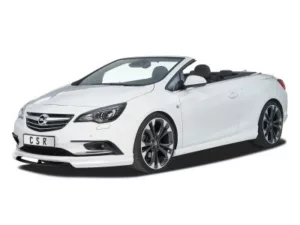
About Vauxhall Cascada
Please find below some useful information about the correct tyre pressure for your Vauxhall Cascada. It is important to note that this information is intended as a guide only, and the most accurate listing of the tyre pressures for your vehicle can be found on the tyre pressure placard that is attached to your vehicle.
Vauxhall Cascada recommended tyre pressure can be found on a tyre placard on the side of driver’s door or door jam, on the fuel door or in the owners manual. Tyre inflation will be listed in psi (pounds per square inch), bar or kPa (kilopascals).
Vauxhall Cascada Tyre Pressures
Checking regularly all tyres on your Vauxhall Cascada, including your spare tyre, once a month or before a long trip is recommended.
| Model / Engine | Tyre Size | Front tyre pressure | Rear tyre pressure |
| Vauxhall Cascada 1.4 Turbo | 235 45 R19 95V | 33 | 33 |
| Vauxhall Cascada 1.4 Turbo | 235 50 R18 97V | 33 | 33 |
| Vauxhall Cascada 1.4 Turbo | 235 55 R17 99V | 33 | 33 |
| Vauxhall Cascada 1.4 Turbo | 245 40 R20 95V | 33 | 33 |
| Vauxhall Cascada 2.0 CDTI | 235 45 R19 95W | 36 | 33 |
| Vauxhall Cascada 2.0 CDTI | 235 50 R18 97W | 36 | 33 |
| Vauxhall Cascada 2.0 CDTI | 235 55 R17 99W | 36 | 33 |
| Vauxhall Cascada 2.0 CDTI | 245 40 R20 95W | 36 | 33 |
Note: This advice is provided for informational purposes and is only to be used as a guide. Consult your owner’s manual for specific tyre (tire) pressure values for Vauxhall Cascada.
Disclaimer
This page contains the Vauxhall Cascada optimum air / tyre pressure based on UK vehicle data in PSI (lbs / Pounds per square inch) as well as the less common bar and kPa (kilopascals) values. Always refer to vehicle owner’s manual for recommended tire pressure settings. Never over-inflate or overload a tyre beyond its maximum capabilities listed on sidewall.
All data is shown for informational purposes only. TyrePressure.org does not warrant or make any representations regarding the accuracy of or the results of the use of this information.
Where to find the tyre pressure placard on a Vauxhall Cascada
To locate the tyre pressure placard for your Vauxhall Cascada, you can check the driver or passenger door opening located on the pillar. In some cases, this placard may also be located under the fuel or charging cap of your vehicle.
It is essential to maintain the correct tyre pressure for your Vauxhall Cascada to ensure optimal performance, safety, and fuel efficiency. Proper tyre pressure can also help prolong the life of your tyres and prevent damage to your vehicle.
Therefore, we highly recommend that you refer to the tyre pressure placard for accurate information and regularly check and adjust the tyre pressure to maintain the correct levels. By doing so, you can enjoy a safe and comfortable ride while maximizing the lifespan of your tyres and your vehicle’s overall performance.

